Anna Tsirat, Doctor of Laws | JVS Law
For three and a half years, the world’s largest aircraft lessors and the London insurance market have been litigating a single question: who bears the loss when a government seizes leased assets and refuses to release them. One award alone exceeded a billion dollars. The matter is still not final.
Contents
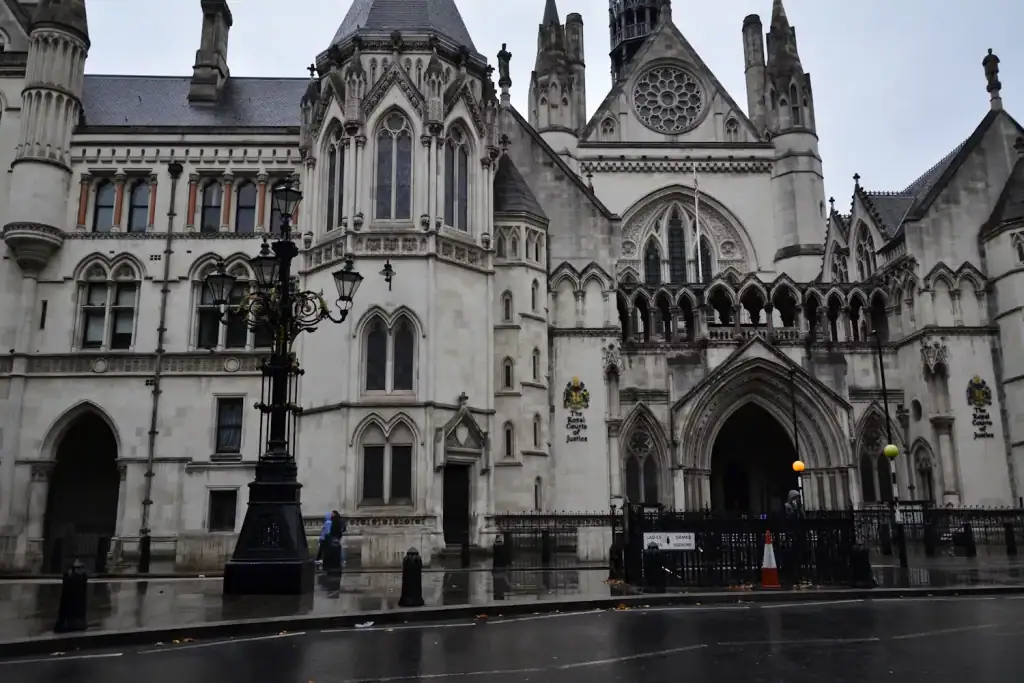
That is what war-risk allocation looks like when it is left to the private market.
In September 2026, Ukraine’s Prime Minister said in public what underwriters have been signalling privately for three years: the classic form of war-risk insurance does not work. He put a budget line behind the statement — provisionally $1 billion, as the state’s share of a fund intended to reach several times that figure.
This article argues that these are not two separate stories. The AerCap litigation is the evidence; Ukraine’s fund is the concession. Together they point to a conclusion that matters well beyond aviation: in any sector holding assets under fire, war risk does not get allocated privately within a timeframe that allows commercial decisions to be made at all. Without a public layer, the deal does not happen — the asset is not placed, the cover is not written, the capital is not committed. What has changed in September 2026 is that a government directly exposed to that risk has said so, and started to build accordingly.
This analysis reflects publicly available information as of 15 September 2026. The mechanisms described below are announced but not yet enacted.
What AerCap decided — and why it is not over
The judgment, handed down by Mr Justice Butcher on 11 June 2025, resolved six concurrent actions brought by the world’s leading aircraft lessors — AerCap, Dubai Aerospace Enterprise, Falcon, KDAC, Merx and Genesis — against a syndicate of war-risk and all-risk insurers, including AIG, AXA, Allianz, Chubb, Fidelis, HDI, Lloyd’s and Swiss Re.
The scale is worth separating carefully, because two sets of figures are in play. Across the consolidated proceedings, the claims concerned 147 aircraft and 16 standalone engines leased to 18 Russian airlines, with an insured value exceeding $4.5 billion. AerCap’s own share of the resulting award was $1.035 billion plus over $240 million in interest, covering the 116 aircraft and 23 engines that remained on lease to Russian carriers at the time of the invasion.
The central legal question was deceptively simple: can property be lost for insurance purposes when everyone knows exactly where it is? The court answered yes. It held that the aircraft were permanently deprived from their owners — and therefore lost — on 10 March 2022, the date Russian Government Resolution No. 311 banned the export of leased aircraft and effectively barred their return. That loss fell within the Government Perils limb of War Risks cover, as restraint or detention, rather than under the broader All Risks cover the lessors had also claimed under.
The distinction mattered financially. AerCap’s War Risks cover carried an aggregate limit of $1.2 billion, well below the roughly $2 billion it had sought under All Risks. The court also found that lessors could recover under the contingent cover section of their policies — triggered when an insured is not otherwise indemnified — rather than possessed cover, and rejected insurers’ argument that EU and US sanctions prohibited payment altogether.
For anyone structuring or reviewing lease agreements and hull war cover on assets exposed to jurisdictions with elevated sovereign or political risk — a question at the centre of our Aircraft Leasing, Acquisition & Repossession practice — the judgment supplies a rare, tested precedent on when a government restraint on export converts a leasing dispute into an insured total loss, and on which layer of cover responds.
None of this closed the matter. At the consequentials hearing on 15–16 September 2025, Mr Justice Butcher refused War Risks Insurers permission to appeal on every ground and ordered payment of the interest referred to above. Fidelis, Chubb and Lloyd Insurance Company — between them the remaining War Risks Insurers other than Starr — then applied directly to the Court of Appeal, which granted permission on 31 March 2026, with a hearing expected to run up to five days and not yet listed. Separately, on an entirely different set of policies, claims under the airlines’ own Operator Policies are listed for trial in the Commercial Court in the Michaelmas term 2026.
Not a one-off dispute: the market delivers its own verdict
It would be easy to read AerCap as an extraordinary case arising from an extraordinary event. The scale of Russia’s 2022 seizure of leased aircraft was, after all, without precedent in commercial aviation. The industry’s own data suggests otherwise.
The IUAI Cyber and Emerging Risks Study Group 2026 Survey, based on responses from 106 aviation insurance and reinsurance professionals worldwide, found that geopolitical instability and war ranked as the sector’s top threat for the first time since the survey began in 2024, drawing 79 first-place votes — the strongest result on record. The same report identifies a wider pattern: supply chain and manufacturing risk entering the top three for the first time, and US claims inflation ranked as the leading operational challenge facing reinsurers. As Swiss Re’s aviation underwriter Florian Zierer put it, the shift reflects risks that are systemic, interconnected and often originate outside aviation itself.
Read against the AerCap timeline, the survey is less a warning about a future risk than a description of a present one. A single dispute arising from a single government’s actions has already cost the London market over a billion dollars in one award, with the appeal and the Operator Policies trial still to come. Underwriters watching that process unfold in real time have responded by moving geopolitical risk to the top of their own list.
This is the market answering the question for itself. Not that war risk is uninsurable in principle, but that pricing it privately, and paying on it privately, has proved to take longer and cost more than the asset-holder can absorb. For counsel advising underwriters, lessors or reinsurers on how to price, structure or dispute war-risk exposure going forward — an area our Structured Asset Finance practice works on directly — that is the context in which any new lease, cover placement or claim is now assessed.
Which raises the question the survey does not answer: if the private layer cannot deliver allocation in usable time, what does?
What Ukraine already has — and why it is not enough
It would be wrong to say that Ukraine has done nothing for businesses that lose assets to attack. It would be equally wrong to treat what exists as an answer to the question above.
The Register of Damage for Ukraine, established within the Council of Europe framework and based in The Hague, opened for claims in April 2024. For its first two years it accepted claims from individuals only. That changed on 29 April 2026, when five categories opened to legal entities and the state — covering critical and non-critical infrastructure, and, under category C3.1, damage, destruction or loss of business assets, including lost profits from those assets and the total loss of a business. Claims are filed through the Diia portal, and are open to legal entities regardless of form or ownership, including state and municipal enterprises. Further categories followed in September 2026, among them loss of business control over property in temporarily occupied territories, bringing the total past thirty.
The volume is substantial: close to 190,000 claims received. But two structural facts define what the Register is and is not.
First, of those 190,000 claims, roughly 58,000 had actually been recorded as of early September 2026; the remainder were still under review. Recording is itself a threshold, not a formality.
Second, and decisively: the body that will assess recorded claims and determine the compensation payable — the International Claims Commission — is not yet operational. The convention establishing it was opened for signature in The Hague on 16 December 2025, where 35 states and the European Union signed; the count has since reached 39 states and the EU. Eight states and the European Union have ratified it, Ukraine among them in April 2026, and the Council of Europe launched a preparatory committee in February 2026 which first met that June. The Register is the first component of a three-part mechanism; the second is being built, and the third, the fund from which anything is actually paid, lies beyond it.
This is not a criticism of the Register, which is doing precisely what it was designed to do, and doing it at a scale without precedent. It is an observation about what it cannot do, and about the gap that remains once it has done its job: between the moment an asset is destroyed and the moment anyone knows what will be paid for it, there is nothing.
The concession: a first-loss fund for war risk
On 12 September 2026, at the YES summit in Kyiv, Prime Minister Serhii Koretskyi addressed that gap directly in conversation with The Economist’s editor-in-chief, Zanny Minton Beddoes. His formulation was blunt: the classic form of war-risk insurance, he said, does not work. The government intends to create a dedicated budget line, provisionally $1 billion, with the expectation that international partners will multiply it, targeting a reserve covering 40 to 50 per cent of damage from attacks. What matters most, he added, is a maximally simplified procedure and a fast response. He also pointed to the leverage behind that arithmetic: a Ministry of Finance programme under which, in his words, the World Bank multiplies each dollar or euro contributed by partners by two.
The announcement sat in the context of winter preparedness and the protection of energy infrastructure. Koretskyi put the fiscal stake plainly: an estimated UAH 70 billion — roughly $1.7 billion — in tax revenue is at risk of not reaching the budget because of attacks on business, an assessment made at the beginning of September and one the government expects to grow.
The structural detail had emerged the previous day. On 11 September, Minister of Economy Oleksandr Kravchenko set out the mechanism under preparation: a special fund covering the first loss layer, with a launch targeted for January 2027 and administration by the Export Credit Agency. The indicated total is $3 to $4 billion — $1 billion from the state, the remainder from donors. Cover is directed at fixed assets critical to production, with an indicated ceiling of $10 million per legal entity, and the fund is to be part-financed by contributions from participating businesses at 2 per cent of the sum insured, or $200,000 at the maximum limit. Reports citing government and parliamentary sources have also raised a VAT increase of 1 to 1.5 percentage points as a funding route; that element is not official.
Several features of this design deserve attention from anyone who has followed the AerCap proceedings, because each one is an answer to something that litigation did badly.
A first-loss layer removes the question of which policy section responds, because the state layer sits ahead of the argument rather than behind it. A defined percentage of loss removes the valuation fight. A simplified, fast procedure removes the multi-year evidentiary contest. An ex-ante capitalisation, sized and co-financed before the loss, removes the solvency question that makes private underwriters cautious about the peril in the first place. And a per-entity ceiling makes the state exposure calculable, which is what allows a budget line to exist at all.
Readers of this firm’s earlier analysis of a trigger-based architecture for reopening Ukrainian airspace will recognise the underlying logic: a mechanism built and legally anchored in advance, with activation tied to measurable conditions rather than to a political decision taken under pressure after the fact. What is new is that a government has now adopted that logic in a different sector, for reasons entirely its own.
Two cautions are necessary. This is an announced design, not an enacted one: the claims threshold, the verification procedure, the governance of the fund, and whether donors in fact multiply the state contribution are all unresolved. And it is not aviation-specific — it is aimed at the sectors under the most direct strike pressure this winter. The significance for aviation is not that the fund covers aircraft. It is that the principle has been conceded.
What this means for lessors, insurers and counsel
Put the three elements side by side and the argument completes itself.
The private market has now produced, at enormous cost, a definitive English-law answer to one narrow question — how restraint and permanent deprivation are read in a hull war policy — and it took three and a half years to get there, with the appeal still pending. The market itself, surveyed independently, has ranked war and geopolitical instability as its foremost threat. And the state most directly exposed to that risk has concluded that the classic private form does not function, and is building a public first-loss layer instead.
The practical conclusion is not that private cover becomes irrelevant. It is that private cover has been shown to work only above a public layer that absorbs the first loss and settles quickly. Where no such layer exists — as was the case for every lessor whose aircraft remained in Russia in March 2022 — the outcome is not non-payment; it is payment after years of litigation, which for most commercial purposes is a different product entirely.
For counsel, three things follow immediately. War-risk clauses and claims procedures should be drafted against the assumption that classification will be contested, because AerCap establishes exactly which distinctions are worth fighting over. Any structure touching a jurisdiction at war should be assessed for whether a public first-loss layer exists or is credibly coming, because that single fact changes the realistic timeline to payment more than any wording. And for clients weighing exposure to Ukraine specifically, the January 2027 fund — if it launches as described — is a material change in the risk picture, well before it covers any aircraft. This is the kind of cross-border assessment our Legal Opinions & Expert Witness practice is asked to provide for courts and tribunals outside Ukraine.
The wider point extends past aviation. Ukraine will not attract private capital into energy, logistics, manufacturing or any other sector holding physical assets under fire on the strength of documented future compensation alone. Nor will it attract aircraft. The Register records what was lost; the Claims Commission, once it is operational, will decide what is owed; but only a capitalised, fast-paying first-loss layer answers the question an investment committee actually asks, which is what happens if the asset is destroyed this winter. That is why the September announcement matters more than its headline figure, and why its detail, once published, will matter more still.
FAQ
What did the Commercial Court decide in the AerCap war-risk litigation?
It ruled that aircraft leased to Russian carriers and not returned after the March 2022 export ban were permanently deprived from their owners as of 10 March 2022, and were therefore lost for insurance purposes even though their location was known. The loss engaged War Risks cover under the Government Perils limb rather than the broader All Risks cover, and was recoverable under the contingent cover section of the policies.
Is that judgment now settled law?
Not yet. At the consequentials hearing on 15–16 September 2025 the trial judge refused insurers permission to appeal on every ground, but three insurers went directly to the Court of Appeal and were granted permission on 31 March 2026. The appeal hearing, expected to last up to five days, had not been listed as of September 2026.
How do the Operator Policies claims differ from the June 2025 judgment?
They arise from different policies. The June 2025 decision concerned cover the lessors bought themselves. The Operator Policies were placed by the Russian airline-lessees under their lease obligations, with lessors named as additional insureds. Different wording, different claimants in substance, and a separate trial listed for the Michaelmas term 2026.
Can Ukrainian businesses already claim compensation for war damage?
They can file, but filing is not payment. Business categories opened at the Register of Damage on 29 April 2026, covering infrastructure, lost assets and lost profits. However, the Register only records eligible claims. The International Claims Commission that will assess them and set compensation amounts has been established by a convention signed by 39 states and the European Union, but it is not yet operational, and the fund that would pay lies beyond it.
Is the proposed first-loss fund specific to aviation?
No. As announced by the Minister of Economy on 11 September 2026, it is aimed at fixed assets critical to production, in the sectors facing the heaviest strike pressure, with a January 2027 target launch, administration by the Export Credit Agency and a ceiling of $10 million per legal entity. Its relevance to aviation is precedential rather than direct: it establishes that the state accepts a first-loss role in war-risk cover.
What should lessors and insurers do differently now?
Treat the existence or absence of a public first-loss layer as a primary variable when assessing exposure, alongside the policy wording itself. AerCap shows what recovery looks like without one: legally successful, and years late. Drafting should anticipate that peril classification will be litigated, and timelines to payment should be modelled on the litigated case, not the clean one.
About the Author
Anna Tsirat is a Doctor of Laws and partner at JVS Law, Kyiv, where she leads the aviation and asset finance practice. She advises international lessors, insurers, institutional investors and cross-border counsel on aviation finance, asset transactions and war-risk exposure in relation to Ukraine. Related reading: a trigger-based architecture for reopening Ukrainian airspace.
For a preliminary assessment of war-risk exposure: