Gennadii Tsirat, Doctor of Laws | JVS Law
On 1 August 2026 the Hague Convention of 25 October 1980 on International Access to Justice entered into force for Ukraine. Parliament passed the accession law on 12 March 2026; the instrument was deposited on 21 May.
Contents
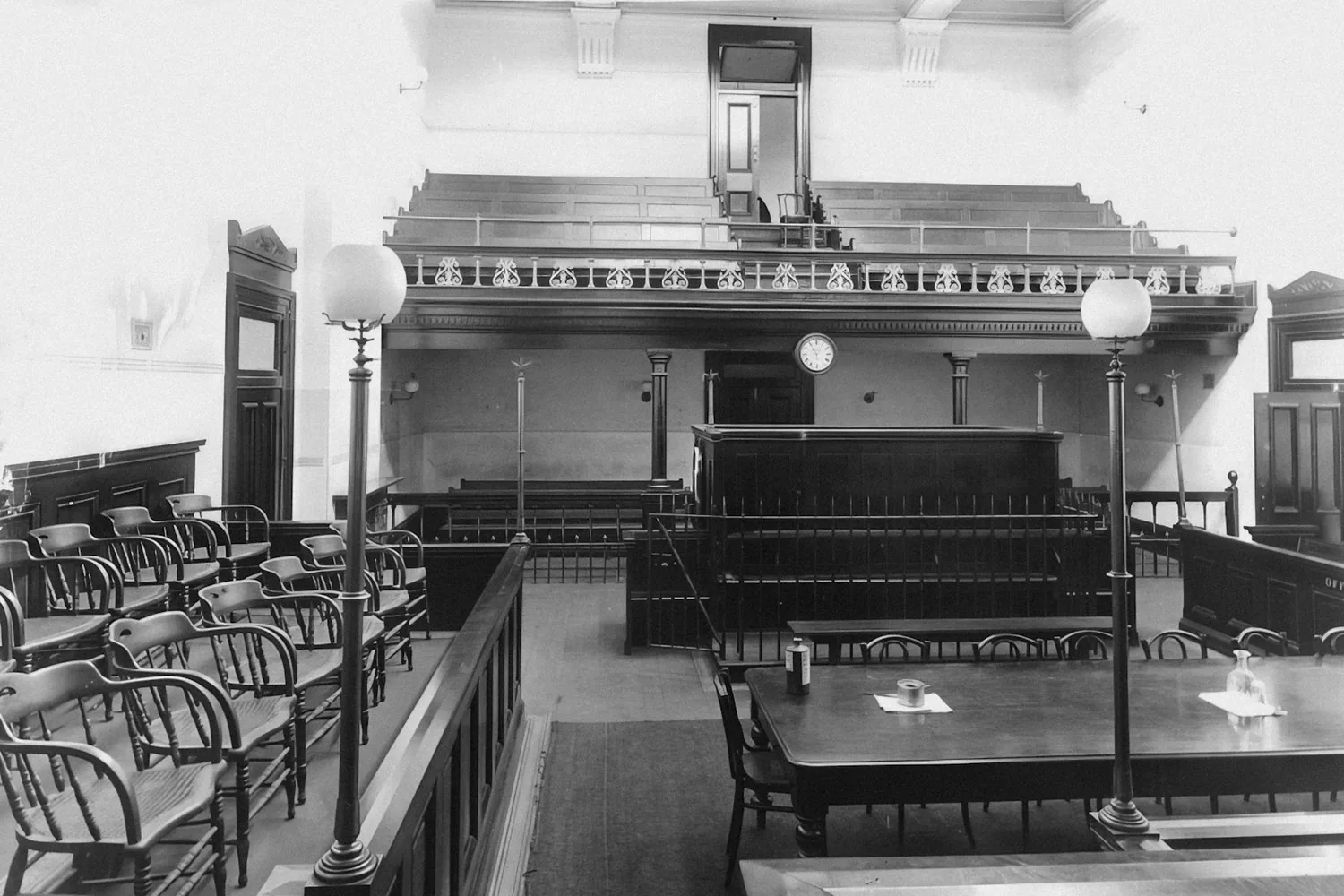
The practical effect is narrow but real: a Ukrainian national or habitual resident who has to litigate in one of the 28 other contracting states can now claim legal aid there on the same terms as that state’s own nationals — no reciprocity requirement, no nationality condition, no legalisation of the paperwork. Most of those states are EU members.
This note sets out what the Convention does, what it does not do, and how the mechanism actually works from Ukraine.
What the Convention actually does
The Convention has four working parts. Only the first is widely reported; the other three matter just as much in commercial practice.
1. Legal aid. Nationals of, and habitual residents in, a contracting state are entitled to legal aid in civil and commercial proceedings in every other contracting state on the same conditions as if they were nationals of, and habitually resident in, that state. Entitlement is assessed by the state where aid is sought, under its own means and merits tests — the Convention removes the foreignness barrier, not the eligibility criteria.
2. Security for costs. No security, bond or deposit may be required of a person solely because they are a foreign national or because they have no domicile or residence in the forum state. This is the abolition of cautio judicatum solvi — historically one of the most effective ways of pricing a foreign claimant out of a case. The Ukrainian rule it meets on the other side is narrower than its reputation — nationality is not one of its three grounds: see security for costs in Ukraine.
3. Cross-border enforcement of costs orders. Where a claimant was exempted from security under the Convention and a costs order is later made against them, that order is rendered enforceable in other contracting states — free of charge.
4. Copies of entries and decisions, and safe-conduct. Access to extracts from official registers and to court decisions on the same terms as nationals; and immunity from prosecution or detention for witnesses and experts who travel to give evidence, for acts predating their arrival.
How an application works from Ukraine
Applications do not go directly to a foreign court. The Convention runs on a chain of designated authorities, and Ukraine has designated the Ministry of Justice as its transmitting authority.
- The applicant identifies the state where proceedings will be, or are being, conducted.
- The application is made on the model form annexed to the Convention, with supporting documents on the circumstances of the case and on the applicant’s means.
- Materials are filed with the Ministry of Justice in Ukrainian, or with a certified Ukrainian translation.
- The Ministry checks completeness and transmits the file to the central receiving authority of the destination state.
- That authority decides entitlement under its own domestic rules.
No legalisation is required for documents transmitted under the Convention — no apostille, no consular certification. For anyone who has assembled a cross-border file the traditional way, that alone removes weeks.
Litigating abroad, or facing a security-for-costs application?
We assess whether the Convention covers your forum, whether a security application can still be pressed against you, how to route a legal aid request through the Ministry of Justice, and how a costs order will travel afterwards. Describe your matter and we’ll respond within one business day.
Write directly: kyiv@jvs.law
Gennadii Tsirat: profile and contact form →
Practice: Dispute Resolution
What it does not do
Three limits are worth stating plainly, because the headlines have not.
It does not create a right to win aid. The destination state applies its own means and merits tests. What changes is that a Ukrainian applicant is assessed as if they were local — not that they are assessed generously.
It covers civil and commercial matters. Criminal proceedings sit outside it, as do most administrative ones.
It works only between contracting states. Twenty-nine parties in total, most in the EU. If the counterparty and the forum sit outside that group, the Convention gives nothing, and the position reverts to domestic law or a bilateral treaty.
Need legal aid abroad — or shielding yourself from a security-for-costs demand? Describe the case — we will say whether the 1980 Convention covers it.
Security for costs: the commercial edge
The abolition of security for costs is the part with direct commercial consequence, and it cuts both ways.
For a Ukrainian claimant abroad: a defendant in a contracting state can no longer demand a bond simply because the claimant is Ukrainian and holds no assets in the forum. In jurisdictions where such applications are routine, that removes a standard early tactic — and a real cash cost at the outset of a case.
For a foreign party litigating in Ukraine: the mirror applies. Nationals and residents of the other contracting states receive the same treatment in Ukrainian proceedings.
Paired with the enforcement rule, the logic closes: a party exempted from security is not thereby immune from costs — an order made against them travels to other contracting states and is enforced without charge.
JVS Law view
For counsel with a Ukrainian element in a matter, the operative provision is Article 14, and it works in both directions.
Security for costs can no longer be required from a party habitually resident in a contracting state by reason only of foreign nationality or of not being domiciled in the forum. That is narrower than it first sounds: the nationality ground is gone, the institution is not. Where domestic law allows security on another basis — impecuniosity, absence of assets as an independent ground, conduct — those remain open. The practical effect is that an application which used to be a routine opening move against a Ukrainian claimant now needs an argument that does not rest on where the claimant is from.
The mirror applies in Ukrainian proceedings for parties from the other contracting states. Read with the 2005 and 2019 Conventions, access, jurisdiction and enforcement now each have a treaty route between Ukraine and the EU — which changes the analysis at the outset of a matter, not merely at enforcement. How quickly the transmission mechanism works in practice will be answered by the first files through it.
Where this sits in the wider picture
This accession is the last link in a chain Ukraine assembled over three years:
- 1 September 2023 — the 2019 Hague Judgments Convention began to apply between Ukraine and the EU member states (except Denmark), giving judgments a treaty route to enforcement;
- 1 August 2023 — the 2005 Choice of Court Convention entered into force for Ukraine, backing exclusive jurisdiction clauses;
- 1 August 2026 — the 1980 Convention completes it at the other end: access to the court in the first place.
Ukraine was already party to the Hague Conventions of 1954, 1965 (service) and 1970 (evidence). With the 1980 Convention the sequence runs end to end: access → jurisdiction → service and evidence → judgment → enforcement.
Our partner analysed exactly this instrument in the Bulletin of the Supreme Court of Ukraine in 2011, closing with the question of whether Ukraine should accede and what it would gain. That analysis, and the answer the last fifteen years produced, is here.
Sources: HCCH status table for the Convention of 25 October 1980 on International Access to Justice; Law of Ukraine No. 4820-IX of 12 March 2026 on accession; guidance of the Ministry of Justice of Ukraine.
About the author
Gennadii Tsirat — Doctor of Laws, partner at JVS Law (Kyiv). Focus: international civil procedure, recognition and enforcement of foreign judgments and arbitral awards, expert evidence on Ukrainian law for foreign courts and tribunals. National Correspondent of Ukraine to UNCITRAL. Author of the textbooks International Civil Procedure and International Commercial Arbitration.
Practice: Dispute Resolution. Profile: Gennadii Tsirat.
On access to justice abroad or security for costs in Ukrainian proceedings —