
For almost four years the honest answer to “how do I check my Ukrainian counterparty?” was uncomfortable: largely, you could not. Open access to the state company register was restricted in the first days of the full-scale invasion, for reasons nobody argued with. Foreign buyers were left signing on trust, a scanned passport and whatever the other side chose to send.
Contents
- 1 What changed on 19 January 2026
- 2 Where to look, and what each source proves
- 2.1 The company register (USR)
- 2.2 The court decisions register
- 2.3 The debtors register
- 2.4 Sanctions
- 3 The trap that costs the most: who may sign
- 4 What no register will tell you
- 5 Two pieces of advice from 2020, and what became of them
- 6 The force majeure letter you will be shown
- 7 Turning the check into contract terms
- 8 A checklist you can hand to someone else
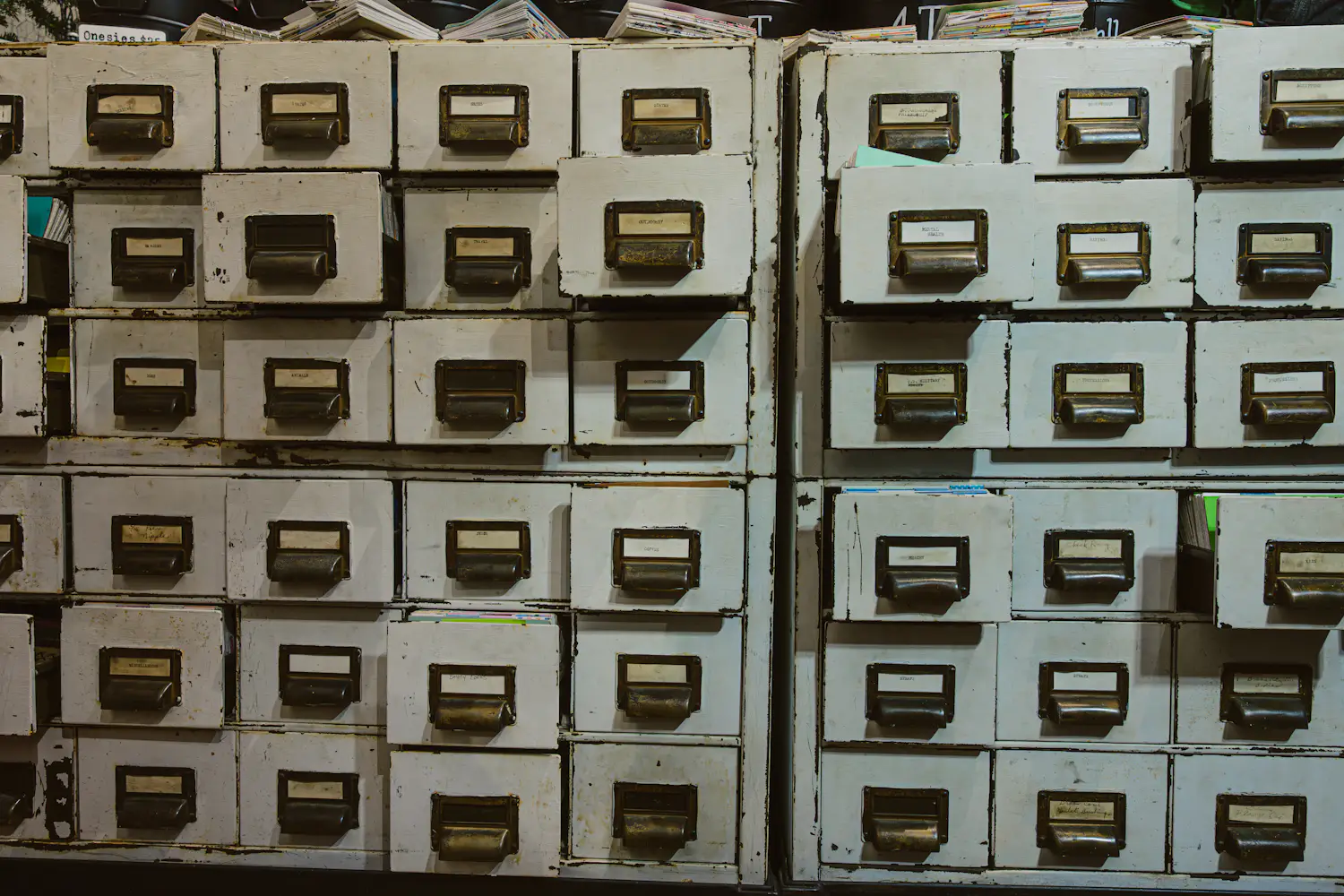
On 19 January 2026 that changed. The register is publishing again — not everything, and not in the form it had in 2021, but enough to do a real check before you sign. This guide sets out what you can now see, what is deliberately withheld, and the things no register will ever tell you. It is the Ukrainian counterpart to our guide on checking Chinese companies, and the contrast between the two jurisdictions is instructive in itself.
What changed on 19 January 2026
The Ministry of Justice resumed publication of the Unified State Register of Legal Entities, Individual Entrepreneurs and Public Formations (the USR, in Ukrainian ЄДР) as open data. The legal basis is Ministry of Justice order No. 3168/5 of 18 November 2025 and Law of Ukraine No. 4576-IX of 21 August 2025, which governs how public electronic registers release data under martial law; the scope follows the list approved by Ministry of Justice order No. 897/5 of 28 March 2016.
Datasets are published on the Ministry of Justice and NAIS websites, with publication on the national open data portal data.gov.ua under way. They are refreshed weekly.
Three categories were deliberately left out of the public datasets, to protect defence manufacturers and strategic facilities:
- contact details;
- the exact location of the entity;
- the economic activity classifier codes (KVED).
Why this matters commercially
The two omissions with practical bite are the address and the activity codes. Without them you cannot confirm from open data alone where process could be served on the company, nor whether its declared line of business matches what it is selling you. Both are recoverable — but through an official extract, not the bulk datasets.
Where to look, and what each source proves
Four sources answer most of the questions worth asking. None of them costs a meaningful amount of money, and three of them take minutes.
1. The company register (USR)
This is the primary source and the only one that carries legal weight. It gives you the registered name, the EDRPOU code (the eight-digit identifier every Ukrainian legal entity has — always contract on the code, never on the name alone, because names repeat), the registration date, the current status, the director, the participants and the ultimate beneficial owners, and the constituent documents.
Two things deserve attention above all others. The first is status: an entity may be “in the process of termination”, which is a different negotiation entirely. The second is the scope of the director’s authority, which we return to below, because that is where foreign suppliers lose the most money.
The register is public: anyone may request information about any company, including a foreign applicant, on presentation of a national or diplomatic passport. A free search on the Ministry of Justice portal gives you the basic picture. An official extract, which is the document a bank, notary or court will accept, is ordered through the Ministry of Justice or Diia. The administrative fee for a paper extract is 0.05 of the subsistence minimum for able-bodied persons, rounded to the nearest UAH 10; the electronic version costs 75% of that and is issued in real time — about two minutes.
2. The court decisions register
The Unified State Register of Court Decisions holds the full text of decisions of all Ukrainian courts. Search by the company name or the EDRPOU code and you see its litigation history: who sued it, for what, how often, and whether it pays only after judgment.
A pattern of debt-recovery claims from suppliers tells you more about payment behaviour than any financial statement. Note the wartime carve-out: publication is withheld in criminal proceedings touching national security, state secrets, border integrity and military service. Commercial litigation is unaffected, which is what concerns you here.
3. The debtors register
The Unified Register of Debtors lists persons against whom enforcement proceedings are open. It answers a narrower but sharper question than the court register: not “has this company been sued”, but “is there a bailiff working on it right now”. A counterparty already subject to enforcement is one whose incoming payments may not reach you.
4. Sanctions
For Ukrainian sanctions there is one legally binding source: the State Register of Sanctions maintained by the National Security and Defence Council at drs.nsdc.gov.ua. The NACP “War and Sanctions” portal is an analytical resource — useful for context, but an entry there is not in itself a legal fact. Screen against your own jurisdiction’s lists separately: EU, OFAC and UK designations do not mirror the Ukrainian register, and it is the mismatch between them that creates the awkward cases.
The trap that costs the most: who may sign
A Ukrainian company acts through its director. The register shows who that is. What it also shows — and what most foreign counterparties skip — is whether the charter limits what the director may sign without a shareholders’ resolution. A cap on transaction value is the usual form.
Article 92(3) of the Civil Code of Ukraine sets the rule, and it reads more favourably to you than people expect: in relations with third parties, restrictions on the authority to represent a legal entity have no legal effect, except where the legal entity proves that the third party knew, or in all the circumstances could not but have known, of those restrictions.
Read that clause twice, because it contains a trap that runs the wrong way. The default protects you. But the protection is lost the moment the company can show that you knew — and the charter is a public document sitting in the register you have just searched. Diligence, done halfway, manufactures the very knowledge that defeats you.
The practical rule
Do not stop at reading the charter. If it caps the director’s authority and your contract exceeds the cap, ask for the shareholders’ resolution approving this transaction, and keep it with the contract. It costs the other side an afternoon. Without it, you have read the limit and signed anyway.
If the worst has already happened and the contract was signed beyond authority, it is not automatically void. Under Article 241 of the Civil Code such a transaction binds the company if the company subsequently approves it — and approval is presumed where the company has acted in a way that shows it accepted performance. Accepting the goods, or paying part of the price, is exactly that.
What no register will tell you
The checks above establish that a company exists, who runs it, and how it behaves when sued. They do not establish that it can pay you. Four blind spots are worth naming, because clients discover them in the same order every time.
- Solvency. Ukraine has no public database of company accounts that a foreign buyer can rely on for a real-time picture. Litigation and enforcement records are proxies for payment behaviour, not for the balance sheet.
- Who actually controls the company. The register shows the ultimate beneficial owner as declared. The annual obligation to confirm those details has been deferred during martial law, so an entry may be several years stale — and in a period when ownership of Ukrainian businesses has changed a great deal.
- Where it really operates. Since the exact location and the activity codes are outside the public datasets, the open data alone will not confirm the address for service or the declared line of business. An official extract will.
- Criminal exposure. Proceedings become visible only once a court decision is published, and the wartime carve-out removes an entire class of those. Absence of a criminal record in the register is not evidence of its absence in fact.
Two pieces of advice from 2020, and what became of them
The first version of this material, published by Kateryna Tsirat in 2020, gave foreign entrepreneurs two concrete tips. Both are worth revisiting, because one has held up and the other has been overtaken by law.
Ask for a Certificate of Good Standing from the Chamber of Commerce and Industry — still sound, with a caveat. The Ukrainian Chamber of Commerce and Industry maintains a Register of Reliable Partners and issues a Certificate of Good Standing to companies whose financial standing has been reviewed. Foreign companies may request non-confidential information from the register. The caveat is structural: this is a non-governmental register and entry is voluntary. A certificate is a positive signal. Its absence proves nothing at all, and a counterparty who treats your request for one as an insult is telling you something.
Beware forged seals — no longer the right question. In 2020 the advice was to look closely at seals on transport and delivery documents, because forgeries circulated. That advice is now obsolete, and in a useful way: Law of Ukraine No. 1982-VIII of 23 March 2017, in force since 19 July 2017, made the use of seals by legal entities and individual entrepreneurs optional. A document is valid on the signature of the authorised person alone, and demanding a seal imprint is itself an administrative offence punishable by a fine of UAH 850 to 1,700.
The practical consequence is the opposite of what most foreign counterparties assume. A seal on a Ukrainian document proves nothing, because nothing requires it to be there; a document without one is not defective. What still matters — and this part of the 2020 advice holds completely — is the transport paperwork itself: waybills, CMR consignment notes, acceptance acts. Those are the documents that prove goods moved, and they are the documents you will need if the dispute ever reaches a tribunal.
About to sign with a Ukrainian counterparty? Give us the company name — we will run the register check and tell you who may actually sign.
The force majeure letter you will be shown
Sooner or later a Ukrainian counterparty in difficulty will send you the Chamber of Commerce and Industry letter of 28 February 2022, No. 2024/02.0-7.1, which certified the armed aggression of the Russian Federation as a force majeure circumstance. It is usually presented as the end of the discussion. Under Ukrainian law it is not the beginning of one.
The position of the Commercial Court of Cassation within the Supreme Court is settled and consistent:
- that letter is not a certificate within the meaning of Article 14-1 of the Law “On Chambers of Commerce and Industry in Ukraine”. It is a general official document containing no identifying features of any particular contract (rulings of 7 June 2023 in cases No. 912/750/22 and No. 906/540/22; 15 June 2023, No. 910/8580/22; 29 June 2023, No. 922/999/22; 2 August 2023, No. 916/1788/22; 13 September 2023, No. 910/7679/22);
- even a genuine certificate, issued for a specific obligation under the Chamber’s Regulation of 18 December 2014, is not conclusive. It is weighed together with the other evidence under Article 86 of the Commercial Procedure Code;
- the decisive element is the causal link between the circumstance and the impossibility of performing that obligation, and the burden of proving it lies on the party invoking force majeure;
- force majeure does not excuse an obligation that fell due before the circumstance arose.
Ukrainian courts have applied this without sentiment. Where a defendant kept trading throughout the period it invoked, the courts have held that the existence of martial law says nothing about that particular relationship. The point is not that war is irrelevant — it plainly is relevant, and often decisive. The point is that it has to be proved against the contract in front of the court, not asserted from a letter addressed to everybody.
Turning the check into contract terms
Due diligence that does not change the contract is an expensive form of reassurance. Three clauses carry most of the weight, and each is worth more than another hour spent in the registers.
- Forum. Decide deliberately between a Ukrainian commercial court and arbitration, rather than inheriting whatever the template said. The trade-offs are set out in International Arbitration vs. Court: How to Choose the Forum for a Ukrainian Contract, and if you choose arbitration, in ICC or the ICAC in Kyiv.
- Governing law. Party autonomy is recognised, and the room it gives you is wider than most templates use — see The Hague Principles on Choice of Law.
- Payment structure. Prepayment, a letter of credit, retention of title, staged delivery against documents. This is where the register findings should show up: a counterparty with an enforcement file against it is not one to extend open credit to.
Signature formalities deserve a line of their own. Ukrainian law recognises contracts concluded in electronic form, but the recognition of a foreign electronic signature is a separate question with its own answer — see Electronic Contracts in Ukraine.
A checklist you can hand to someone else
- Get the EDRPOU code and contract on it, not on the trading name.
- Pull the entity’s record: status, registration date, director, participants, ultimate beneficial owner.
- Read the charter for limits on the director’s authority. If your deal exceeds them, obtain the shareholders’ resolution.
- Check whether the person signing is the director or an attorney — and if the latter, read the power of attorney, including its date and scope.
- Search the court decisions register by name and code for the last three years, with attention to supplier debt claims.
- Check the debtors register for open enforcement proceedings.
- Screen against the NSDC sanctions register, and separately against EU, OFAC and UK lists.
- Ask for the Chamber’s Certificate of Good Standing, and read the reaction as data.
- Order an official extract before signing anything material — the free search is for triage, the extract is the document.
- Write the findings into the contract: forum, governing law, payment structure.
Steps one to seven take an afternoon. Step ten is the one that decides whether the afternoon was worth anything.
Checking a Ukrainian counterparty before you sign?
We run counterparty and transaction due diligence in Ukraine, structure supply and distribution contracts for foreign principals, and litigate the disputes when a deal goes wrong. Send us the counterparty and the draft — we reply within one business day.
Kateryna Tsirat: profile and form →
Practice: Legal due diligence in Ukraine · Contract structuring
Published 13 August 2026, replacing a 2020 note by Kateryna Tsirat that pointed to an external publication no longer available online. Register access is stated as at the resumption of open data publication on 19 January 2026 (Ministry of Justice order No. 3168/5 of 18 November 2025; Law of Ukraine No. 4576-IX of 21 August 2025). Article 92(3) and Article 241 quoted from the Civil Code of Ukraine in the wording in force; the seal rule from Law No. 1982-VIII of 23 March 2017. The force majeure positions are taken from the Supreme Court’s own survey of the case law of its Commercial Court of Cassation, with the case numbers cited above. Registers change, and wartime rules change faster than most — verify status before relying on any of this in a transaction.